

Table of Contents
- Define Your Signage Goals and Business Needs
- Understand Types of Business Signs
- Select Business Sign Materials and Finishes
- How to Choose a Sign Font and Typography
- Business Sign Size and Placement Strategy
- Design, Branding, and Visual Impact
- Plan for Installation, Maintenance, and Longevity
- Measure Sign Effectiveness and Adjust
- Frequently Asked Questions
Last Updated: October 7, 2026
Define Your Signage Goals and Business Needs
Choosing custom business signage starts with clarity about what you want it to do: attract foot traffic, build brand recognition, direct customers, or guide people through your space. Each goal demands different design choices.
Work through the four steps below in order to arrive at a sign specification instead of a wish list.
Step 1: Name the single primary job
Write one sentence starting with "This sign exists to..." and finish it with a verb:
- "...get drivers on the highway to exit and find our lot."
- "...help first-time visitors find the restrooms without asking staff."
- "...signal to walk-in traffic that we are open and professional."
If you cannot pick one primary job, you are describing two signs. A monument sign at the curb and a lobby directory solve different problems and rarely share a design.
Step 2: Identify the audience and the reading moment
Who reads the sign, and what are they doing when they read it? A driver at 35 mph has two to three seconds of attention; a pedestrian at the door has ten seconds or more. This determines viewing distance, letter height, realistic text volume, and whether the sign must work at night, in rain, or through window glare.
Step 3: Set the constraints before the design
Capture these constraints before you talk to a designer or vendor:
- Budget range, including installation and any permit fees, not just the panel.
- Physical limits: available wall space, setback from the property line, height allowed by local code, and whether the building is leased.
- Landlord or property rules if you rent, including sign criteria for the shopping center or office park.
Step 4: Rank the trade-offs
Every sign project forces trade-offs between cost, durability, visibility, and design ambition. Decide in advance which one you will protect: if durability wins, you may accept a plainer design in a heavier material; if visibility wins, a larger sign and higher permit burden.
Common signage goals, and what each one implies
Match your primary job to the design implications:
- Increase visibility from the street or parking lot, prioritize letter height, contrast, and possibly illumination; expect a larger sign and a permit review.
- Reinforce brand identity and logo, prioritize color accuracy, logo reproduction, and consistency with your other materials.
- Direct customers to entrances, departments, or services, prioritize legibility at close range, consistent iconography, and ADA-compliant mounting heights where required.
Your budget shapes what is possible, from printed vinyl to illuminated dimensional signs. Understanding constraints upfront prevents costly revisions later.
Understand Types of Business Signs
Exterior signs grab attention from outside: monument signs, wall-mounted signs, pylon signs, and window graphics. They must withstand weather and stay visible from a distance.
Interior signs guide customers inside: wayfinding signs direct traffic, department signs identify sections, and exit and safety signage meet legal requirements.
Exterior vs. Interior Signage
Exterior signs face sun, rain, and wind, so they need durable finishes and weather-resistant materials. Interior signs don't battle the elements but still need to be readable and reinforce your brand, and they often last longer. The choice depends on where your customers are: a retail storefront needs strong exterior signage, an office building needs clear interior wayfinding, and many businesses need both.
Select Business Sign Materials and Finishes
Material choice affects durability, appearance, and cost:
- Aluminum: Lightweight, durable, rust-resistant. Works indoors and out.
- Wood: Warm, classic look. Requires maintenance. Better for covered areas.
- Metal (steel, brass, copper): Premium, long-lasting. Higher cost.
Finishes include matte, gloss, brushed, and textured. Matte hides fingerprints and scratches; gloss pops with color but shows wear. Choose based on location and maintenance capacity.
Durability and Climate Considerations
In direct sunlight, UV-resistant finishes are essential; matte holds up better than gloss. In wet climates, drainage and corrosion resistance matter most: aluminum and stainless steel handle moisture better than wood or untreated metal. In cold climates, temperature swings stress joints and fasteners, so choose materials with similar expansion rates and avoid brittle plastics.
How to Choose a Sign Font and Typography
Your font shapes how people read and perceive your sign. A font choice is a brand choice.
Sans-serif fonts (no decorative tails) are clean, modern, and easy to read from a distance, Helvetica, Arial, Gotham. Serif fonts feel traditional or upscale and suit established brands, but are harder to read from far away, Times New Roman, Garamond.
Legibility rules:
- Avoid thin fonts. Bold or medium weights are easier to read.
- Limit yourself to two fonts maximum. One for headlines, one for body text.
- Test your font choice from the distance your customers will read it.
Business Sign Size and Placement Strategy
Size matters: too small won't be seen, too large looks aggressive and can violate local codes. Start with viewing distance, a rough rule is one inch of letter height per 10 feet of viewing distance. Placement affects visibility: high placement grabs attention from far away, eye-level placement feels welcoming, and corner locations catch traffic from multiple directions.
Viewing Distance and Visibility
Calculate minimum letter height by dividing viewing distance by 10: a sign read from 50 feet needs letters at least 5 inches tall. Color contrast drives visibility: black or dark blue on white or yellow works best; avoid red and green together (color blindness) and light text on light backgrounds (Guidance on Web Accessibility and the ADA).
Zoning and Compliance Requirements
Before installing, check local zoning codes. Most cities regulate sign size, height, lighting, and placement, including:
- Maximum sign area (measured in square feet)
- Maximum height above ground or building
- Setback requirements (distance from property line)
Contact your local building or planning department for code summaries and application forms; approval upfront prevents costly removal later. Accessibility laws also apply: the ADA requires accessible signage in certain locations, and exit, restroom, and directional signs must meet specific standards. Work with your sign provider to ensure compliance.
Design, Branding, and Visual Impact
Your sign is a brand ambassador, communicating your values, professionalism, and personality in seconds.
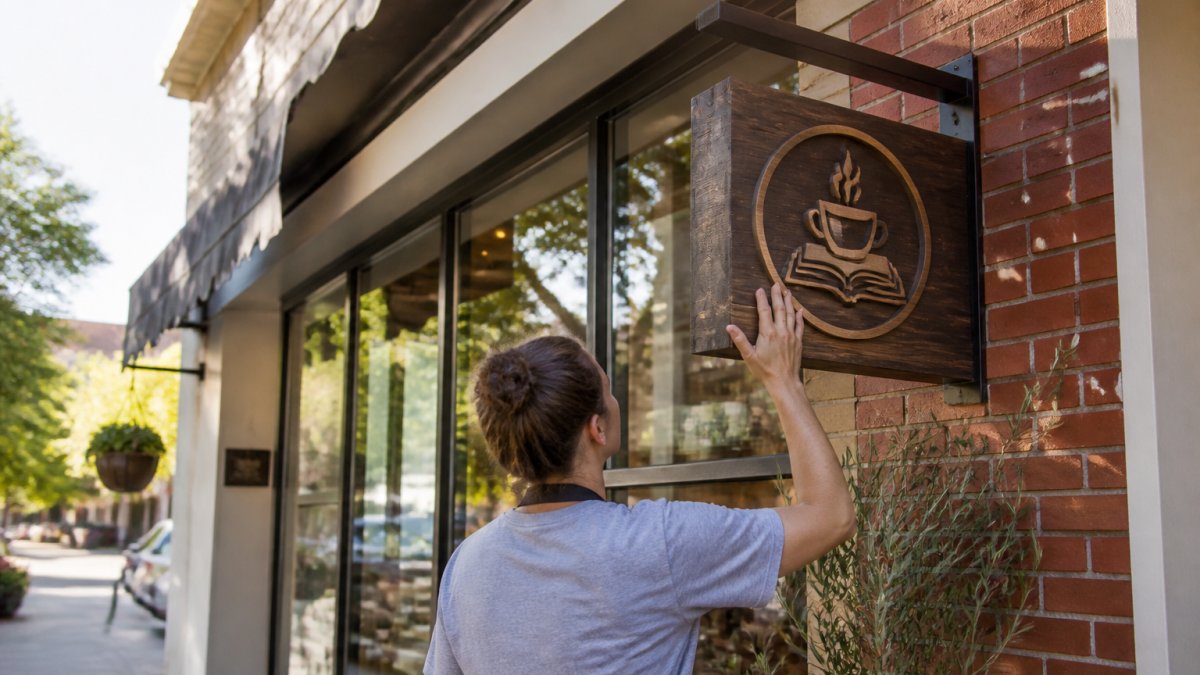
Consistency matters: use the same colors, fonts, and logo style across all signage so customers immediately know it's you.
Your logo deserves prominence. If the sign is cluttered with text, the logo gets lost. Simplify to your business name and one key detail (service, tagline, or phone number).
Color psychology influences perception: blue conveys trust, red grabs attention but can feel aggressive, green suggests growth or health, and yellow stands out but can feel cheap if overused. Choose colors that match your brand personality.
Plan for Installation, Maintenance, and Longevity
The decisions that determine whether your sign still looks good in year seven happen after artwork approval: who builds it, how it's installed, what it costs to own, and how you verify quality.
What actually drives the price
Custom signage is quoted per project, not per square foot, because several variables move the number:
- Size and material: a large aluminum panel costs more in raw material and in the equipment needed to cut, weld, and finish it.
- Illumination: internal LED illumination requires a raceway, power supply, wiring, and often an electrician, which can rival the cost of the sign face itself.
- Mounting method: a flush wall mount is least expensive. A monument sign needs footings, concrete, and sometimes a structural engineer. A pylon sign needs a pole, foundation, and possibly a permit for pole height.
Total cost of ownership, not just purchase price
The purchase price is only the first line item. Over the sign's life, plan for:
- Energy: illuminated signs draw power during business hours. LED modules use far less energy than older neon or fluorescent systems and last much longer, which is why most new illuminated signs use them.
- Maintenance: wood needs periodic sealing or refinishing, painted surfaces need touch-ups, and illuminated signs need occasional module or power-supply replacement.
- Repair: storm damage, vehicle strikes, and vandalism are the most common causes of unplanned repair. Check whether your business insurance covers signage.
Evaluate the vendor, not just the proof
A beautiful proof means nothing if the shop cannot execute it. Compare sign companies on:
- Portfolio in your category: have they built the sign type you need, at your scale, for a business like yours?
- Proof process: do they provide a scaled proof showing fonts, colors, and layout, and confirm color matching against your brand standards?
- Materials specification: will they name the substrate, thickness, finish, and LED brand in writing?
- Warranty: what is covered, for how long, and does it include labor?
Quality checks before and after installation
Inspect the sign at three points:
- Proof stage, verify spelling, phone number, address, logo proportions, and color values against your brand guide.
- Pre-installation, confirm dimensions, material, and finish match the approved specification, and that electrical components are listed for outdoor use.
- Post-installation, check level and plumb, fastener placement, sealant at penetrations, and even illumination with no dark spots. Confirm visibility from intended distances in daylight and at night.
Installation quality affects longevity
Poor installation causes signs to sag, crack, leak, or fall. Hire experienced, insured installers with references, and for any sign penetrating the building envelope or requiring electrical work, use licensed trades and confirm code compliance.
Document everything
Keep a file with the approved proof, material and finish specs, LED brand and model, permit numbers, installation date, and photos. This eases future repairs, warranty claims, and rebrands, and gives the next vendor an accurate starting point.
Measure Sign Effectiveness and Adjust
Your sign should earn its cost through increased visibility, foot traffic, or brand recognition.
Track metrics that matter:
- Foot traffic before and after installation
- Customer inquiries or comments about the sign
- Sales from new customers who mention seeing your sign
- Search volume for your business name (a strong sign increases local searches)
After 30 days, assess whether the sign is visible from intended distances, noticed by customers, and accurately reflecting your brand.
Common adjustments include:
- Increasing letter size or contrast if readability suffers
- Changing colors if the sign blends into the background
- Relocating the sign if it's blocked by trees or other obstacles
- Adding lighting if the sign is hard to see at night
Custom business signage is an investment. The right sign pays dividends through visibility and brand reinforcement, so take time to get it right with experienced providers who understand your market and goals.
Choosing custom business signage is one of the most visible decisions you'll make. Explore Custom & Personalized Signs and other options to find the perfect fit for your business, or browse our Wildly Unapologetic Collection and Bookish Collection for distinctive design styles that make a statement.
Frequently Asked Questions
What should I consider when choosing custom business signage?
Start by identifying your primary goal: location identification, wayfinding, brand differentiation, or regulatory compliance. Consider your budget, viewing distance, indoor or outdoor placement, and target audience. Evaluate materials based on climate and durability needs, select fonts for legibility at your intended viewing distance, and ensure your design reflects your brand identity. Finally, verify zoning laws and ADA accessibility requirements before finalizing your order.
Which sign materials work best for indoor and outdoor use?
Indoor signage can use materials like vinyl, acrylic, or wood without worrying about weather exposure. Outdoor signs need durable materials like aluminum, metal, or treated wood that resist fading, moisture, and temperature swings. Consult your vendor about material longevity in your specific climate.
How do I know the sign design will actually look the way I'm imagining?
Request a custom design proof before production begins. A reputable vendor will provide a digital mockup showing your exact colors, fonts, layout, and branding elements so you can approve or request changes. This prevents costly mistakes and ensures the finished sign matches your vision. Take time to review the proof in different lighting conditions if possible, and ask for revisions if anything doesn't meet your expectations.
What are the do's and don'ts of business signage?
Do keep your message clear and concise, use high-contrast colors for readability, choose fonts legible at your viewing distance, and ensure proper lighting for visibility. Include your business name, logo, and contact information where relevant. Don't overcrowd your sign with too much text, use trendy fonts that may look dated quickly, or place signs where they block sightlines or violate zoning codes. Avoid colors that clash with your brand identity, and never ignore ADA accessibility standards for required signage.